Silver occupies an unusual position in the investment market. It is both a precious metal and an industrial commodity, meaning its price can be influenced by investment demand as well as economic and manufacturing activity.
That combination can create opportunities, but it can also produce greater price fluctuations than some investors may expect. Someone considering silver therefore needs to look beyond whether the price might rise and consider the role the metal would play within a broader investment strategy.
The question is not simply whether silver is a good investment. It is whether the characteristics, costs and risks of silver are appropriate for a particular investor’s objectives, time horizon and tolerance for volatility.
Why Do Investors Consider Silver?
Investors consider silver for several different reasons. Some want exposure to a precious metal, while others are interested in its industrial applications and the possibility that changes in industrial demand could affect prices.
Silver can therefore provide a different type of exposure from traditional assets such as equities and bonds. It can also behave differently from gold because of its stronger connection to industrial activity.
For investors, this creates both an opportunity and a consideration. Silver may provide diversification within a broader portfolio, but its performance can be influenced by several factors at the same time.
See also: How Does Residential Roof Maintenance Protect Your Home?
Silver’s Investment and Industrial Roles
Silver has long been used for monetary purposes, jewellery and physical investment. It is also used in a range of industrial applications, including electronics, electrical components and solar-related technologies.
This dual role is one of the defining characteristics of silver as an investment. When investor interest in precious metals increases, investment demand can influence prices. At the same time, changes in manufacturing, technology and economic activity can affect industrial demand.
The result is a market influenced by both financial and physical-economy factors. This can make silver particularly sensitive to changing expectations around economic growth, industrial production and precious-metal sentiment.
Investors should therefore avoid treating silver simply as a cheaper version of gold. The two metals share some characteristics, but their demand structures are different.
Potential Benefits and Risks of Investing in Silver
One reason investors choose to invest in silver is diversification. Silver provides exposure to a globally traded precious metal while also having an industrial demand base.
Potential advantages include:
- Precious-metal exposure: Silver allows investors to gain exposure to the precious-metals market.
- Industrial demand: Its use in manufacturing and technology provides an additional source of demand.
- Physical ownership: Investors can own tangible silver bullion rather than only holding financial exposure to the metal.
- Portfolio diversification: Silver may behave differently from some traditional financial assets and from gold.
- Multiple investment formats: Investors can choose between physical bullion and other forms of market exposure, depending on their objectives.
These characteristics do not eliminate investment risk.
Silver prices can experience significant fluctuations, while physical silver can involve premiums, storage expenses and differences between purchase and resale prices. Industrial exposure can also make silver sensitive to changes in economic activity.
Whether silver is a good investment therefore depends on the individual investor. A person with a longer time horizon and greater tolerance for volatility may assess silver differently from someone seeking predictable returns over a short period.
What Can Affect Silver Prices?
Silver prices are influenced by a combination of supply and demand, industrial activity, investment sentiment, currency movements and wider precious-metals market conditions.
No single factor consistently determines the direction of the market. The relative importance of each driver can change as economic and financial conditions evolve.
Industrial Demand and Market Cycles
Industrial demand is an important characteristic of the silver market.
Silver’s use in electronics, electrical applications, solar technology and other industrial processes means that changes in manufacturing activity can influence demand. Stronger activity in industries that consume silver may support demand, while weaker economic conditions can have the opposite effect.
This industrial connection can also contribute to differences between silver and gold. Gold is more heavily associated with investment, monetary and reserve demand, whereas silver has a substantial industrial component.
Consequently, silver can respond to changes in economic expectations in ways that differ from gold. Investors assessing silver should consider both precious-metal conditions and the wider industrial environment.
Investment Demand and Precious-Metal Sentiment
Investment demand is another important influence on silver prices. Changes in investor interest can affect demand for physical silver as well as financial products linked to the metal.
Precious-metal sentiment can be influenced by expectations around inflation, interest rates, currencies, economic conditions and financial-market uncertainty. These factors can change relatively quickly, which can contribute to short-term price movements.
This distinction matters for investors because the reasons for owning silver are not necessarily the same as the factors driving its price from one day to the next.
Someone holding silver as part of a longer-term allocation may be prepared to tolerate temporary volatility. An investor seeking relatively stable short-term performance may have a different assessment of the same asset.
Physical Silver vs Other Investment Routes
There are several ways to gain exposure to silver. The appropriate route depends on whether an investor prioritises physical ownership, convenience, liquidity or direct exposure to the underlying metal.
| Investment route | Potential advantage | Key consideration |
| Silver bullion | Direct ownership of physical metal | Premiums, storage and resale |
| Silver coins | Smaller individual denominations | Premiums can vary by product |
| Silver bars | Available in different weights | Larger units can require more upfront capital |
| Online silver products | Convenient purchasing and product comparison | Ownership and storage structure should be understood |
| Financial silver exposure | May provide market exposure without physical storage | Investor does not necessarily hold the underlying metal directly |
The distinction between these routes is important because the market price of silver does not necessarily represent the final cost or resale value of a physical product.
Silver Bullion
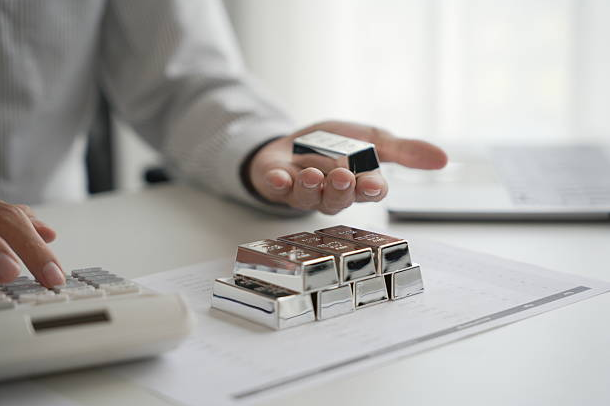
Silver bullion generally refers to investment-grade silver products such as bars and coins. Physical ownership can appeal to investors who prefer holding a tangible asset rather than relying entirely on financial exposure.
However, physical silver normally involves costs beyond the underlying spot price. A dealer may charge a premium, while the eventual resale price may differ from the price paid when the silver was acquired.
Storage is another consideration. Investors holding physical silver need to determine how the metal will be secured and whether storage, insurance or other costs apply.
Before purchasing silver bullion, buyers should consider:
- The weight and purity of the silver
- The premium above the underlying silver price
- Dealer fees and transaction costs
- Storage and security arrangements
- Potential resale channels
- The difference between the purchase and potential resale prices These factors can affect the actual economics of physical ownership.
Online Silver Buying
Online platforms provide another route for investors who want to purchase silver without necessarily visiting a physical location. Depending on the provider and product structure, online purchasing can make it easier to compare available products, quantities and prices.
For those looking to buy silver online in the UAE, the key question is not simply whether online purchasing is available. The investor should understand what is being purchased, how ownership is established and how the silver is stored.
Important considerations include:
| Question | Why it matters |
| Is the silver physically allocated? | Determines the nature of the investor’s ownership |
| What is the silver’s purity and form? | Establishes what asset is actually being purchased |
| What premiums or fees apply? | Determines the total acquisition cost |
| How is the silver stored? | Affects security and potential ongoing costs |
| Is physical delivery available? | Determines whether the investor can take possession where applicable |
| How does resale work? | Helps establish potential exit options |
| What terms apply? | Clarifies the rights and responsibilities associated with the purchase |
For example, ISA Bullion is a provider of physical precious metals that can serve as one example of the types of bullion products and purchasing arrangements investors may encounter. The same criteria should be applied when evaluating any provider.
Silver Investment Risks to Consider
Silver should not be treated as an asset that is guaranteed to rise during periods of economic uncertainty. Its price can be affected by several competing forces, and investors can experience losses as well as gains.
Price volatility is one of the main considerations. Silver can experience substantial short-term price movements, meaning investors need to consider whether they can tolerate fluctuations in the value of their holdings.
Industrial exposure creates another source of risk. Because silver is widely used in industrial applications, changes in economic activity, manufacturing demand or technology can influence the balance between supply and demand.
Physical ownership costs can also affect returns. Investors buying bullion may pay premiums above the spot price and incur storage or security expenses.
Liquidity and resale should be considered at the product level. Although silver is a globally traded commodity, the ease and cost of selling a particular physical product can depend on its form, denomination, location, dealer and prevailing market conditions.
These risks do not necessarily make silver unsuitable. They highlight why the investment case should be assessed according to both potential benefits and the costs and risks involved.
Is Silver Suitable for Your Investment Goals?
The decision to invest in silver should ultimately depend on the role the metal is expected to play within an investor’s broader financial strategy.
A person seeking diversification and willing to tolerate significant price fluctuations may view silver differently from someone who needs relatively predictable returns or expects to use the invested money in the near future.
| Consideration | Question to ask |
| Investment objective | Why is silver being purchased? |
| Time horizon | How long can the investment be held? |
| Risk tolerance | Can significant price fluctuations be tolerated? |
| Ownership | Is physical silver preferred, or is another form of exposure more appropriate? |
| Costs | What premiums, fees, storage costs and spreads apply? |
| Portfolio role | How would silver fit alongside existing investments? |
| Liquidity | How easily could the investment be sold when required? |
It is also important to distinguish silver from gold. Both are precious metals, but gold is more closely associated with monetary and investment demand, while silver has a larger industrial component.
That difference can contribute to different price behaviour. Investors deciding whether to purchase silver or gold should therefore consider their objectives rather than focusing only on the current price of either metal.
Common Mistakes New Silver Investors Make
New investors can make avoidable mistakes when approaching silver primarily as a short-term price opportunity.
One common mistake is focusing only on the spot price. The price displayed in financial markets may not be the same as the amount required to purchase physical silver.
Premiums, fees and other transaction costs can increase the final acquisition cost.
Another is underestimating volatility. Silver can experience sharp price movements, so money that may be required in the near term may not be appropriate for a highly volatile asset.
Investors can also make the mistake of buying without understanding the product. Different forms of silver can have different premiums, denominations, liquidity characteristics and resale arrangements.
Ignoring storage and security is another consideration when purchasing physical bullion. The practical cost and responsibility of protecting a physical holding should be understood before the purchase.
Finally, investors should avoid treating silver as a guaranteed protection against every type of economic uncertainty. Its price can respond to industrial conditions, investment demand, currency movements and broader market sentiment in different ways.
Frequently Asked Questions
Is silver a good investment?
Silver can be a useful investment for some investors, but it is not universally suitable. Its potential benefits need to be weighed against price volatility, industrial exposure, premiums, storage costs and resale considerations.
Why invest in silver instead of gold?
Investors may choose silver because it combines precious-metal characteristics with significant industrial demand. Silver can therefore behave differently from gold, although it can also experience greater volatility.
Is silver a good investment for beginners?
Silver can be considered by beginners who understand its risks and costs, but there is no universally appropriate allocation. New investors should consider their time horizon, risk tolerance, investment objective and the costs associated with the chosen form of silver.
What affects the price of silver?
Silver prices can be affected by industrial demand, investment demand, supply conditions, economic activity, currency movements and broader precious-metals market sentiment.
Is physical silver a good investment?
Physical silver can provide direct ownership of a tangible asset, but investors need to account for premiums, storage, security, liquidity and the difference between purchase and resale prices.
What should investors consider when buying silver bullion?
Investors should consider the silver’s purity and weight, purchase premium, total transaction cost, storage arrangements, authenticity, liquidity and potential resale conditions.
Can investors buy silver online in the UAE?
Investors can purchase certain silver products through online platforms in the UAE, depending on the provider and product structure. Before purchasing, buyers should understand ownership arrangements, pricing, storage, delivery options and resale terms.
What does it mean to purchase silver online?
Purchasing silver online means acquiring a silver product or exposure to silver through a digital platform rather than necessarily completing the transaction at a physical location. The exact ownership structure depends on the product and provider.
Is silver more volatile than gold?
Silver can be more volatile than gold because its market is influenced by both investment demand and industrial activity. The difference in volatility is not constant and can vary according to market conditions.
What are the main risks of investing in silver?
The main risks include price volatility, industrial-demand exposure, purchase premiums, storage costs and potential differences between the price paid and the price available when the silver is sold.
Is silver a good short-term investment?
Silver may not be suitable for every short-term investment strategy because its price can fluctuate significantly. Whether it is appropriate depends on the investor’s ability to tolerate short-term losses and their investment objectives.
Conclusion
Silver can play a role in an investment portfolio because it combines precious-metal characteristics with significant industrial demand. That combination can create diversification opportunities, but it also means the metal can respond to economic and market conditions differently from gold.
Investors considering silver should look beyond the headline market price and evaluate premiums, ownership structure, storage, liquidity, resale spreads and volatility. These considerations apply whether the investment involves physical bullion or an online silver-purchasing arrangement.
Ultimately, deciding whether silver is a good investment depends on the investor’s objectives, time horizon and tolerance for risk. The most appropriate approach is one that recognises both the potential role of silver and the costs and uncertainties associated with owning it.