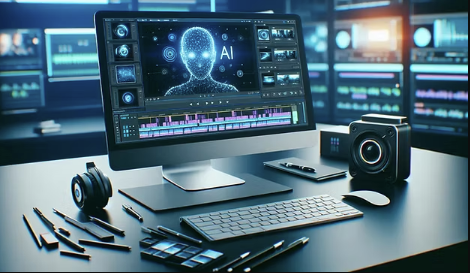
AI in video editing reshapes workflows with modular blocks: color grading, tagging, stabilization, and automated cuts. Tools emphasize transparent collaboration, rapid rough cuts, and precise fine-tuning. Evaluation focuses on governance, auditable decisions, and versioning to preserve originality. The balance between automation and human oversight defines creative control. As teams experiment with transitions and synthetic cues, questions arise about accountability and workflow efficiency that demand careful consideration. The next step demands closer inspection of practical implications and guardrails.
How AI Transforms Everyday Video Editing
AI-powered tools accelerate routine workflows by automating mundane edits, enabling editors to focus on creative decisions. The approach reframes tasks through modular AI blocks: AI assisted color, automated tagging, and motion stabilization streamline baselines while preserving control.
Narrative pacing benefits from AI generated transitions and synthetic audio cues, offering adaptable timing. This framework supports freedom by enabling rapid, precise iteration without sacrificing intent.
Tools, Features, and Workflows You Can Use Now
The landscape of practical tools and workflows available today blends automated capabilities with human oversight to keep creative direction intact.
Modern editors integrate AI collaboration with transparent controls, enabling rapid rough-cut iterations and precision fine-tuning.
Practical use highlights include motion tracking, color matching, and audio clean-up.
AI limitations, Ethical considerations, and Creative workflows shape responsible adoption while empowering flexible, freedom-seeking teams.
Evaluating AI Assistants: What to Look for in Pro and Indie Projects
Evaluating AI assistants for both professional and independent productions requires a structured lens: functional capability, reliability, and governance. The assessment centers on evaluation criteria, measurable outputs, and integration impact. In pro and indie contexts, collaboration dynamics matter: clear role delineation, transparent decision logs, and safe handoffs. Controllers balance speed with accountability, ensuring scalable automation without compromising creative intent or governance.
Practical Tips to Maintain Your Creative Voice With AI
How can creators preserve a distinct voice when AI tools contribute procedural and aesthetic decisions across editing pipelines? The approach emphasizes deliberate prompt framing, modular workflows, and auditable edits to prevent drift.
Maintain creative resistance by evaluating AI suggestions against intent, and preserve personal integrity through transparent usage, versioning, and bias checks that safeguard originality while leveraging automation for efficiency.
Frequently Asked Questions
How Does AI Handle Copyright and Licensing for Edited Footage?
AI systems enforce copyright and licensing through automated copyright tracking, licensing compliance, and content ownership checks; they analyze data security and script originality while minimizing editorial bias, aiding transparent content ownership, though residual licensing complexity remains. 35 words.
Can AI Replace Human Editors in Professional Studios?
AI replacement of editors in professional studios is unlikely to fully supplant human expertise; instead, AI augments workflows. It enables Studio collaboration, elevating speed and precision while preserving creative judgment and strategic decision-making as core competencies.
What Biases Might AI Introduce Into Color and Style Decisions?
Bias convergence and style homogenization may occur, as algorithms favor learned distributions over individual taste. Juxtaposition: precision meets ambiguity, color science clings to datasets, while creative risk lingers. The system aims neutrality, yet perceptual variance persists.
How Secure Is Client Data When Using AI Editing Tools?
Data privacy risks depend on provider safeguards and local regulation; client data may be exposed during model training if not properly anonymized. Strong encryption, access controls, and transparent data handling are essential for secure AI editing workflows.
See also: oftenmagazine
Will AI Smart Enough to Generate Original Scripts or Narratives?
AI generated plots show potential for narrative originality, though true autonomy remains uncertain; systems may craft coherent concepts but often rely on training data. Narrative originality depends on interpretation, prompting strategies, and constraints guiding user-authorial freedom.
Conclusion
AI in video editing is reshaping workflows without compromising authorship. By modularly integrating color AI, tagging, stabilization, and pacing cues, editors gain speed and precision while retaining control through auditable decision logs and versioning. As tools mature, collaboration becomes transparent and iterations rapid, yet human oversight remains indispensable to preserve intent. In this evolving orchestra, automation acts as a metronome—precise timing beneath a human melody, guiding motion and meaning toward consistently compelling narratives.